

How do additives affect the shear strength of WPC flooring?
As a seasoned supplier of additives for WPC (Wood - Plastic Composite) flooring, I've witnessed firsthand the transformative power of additives in enhancing the performance of WPC flooring products. Among the various performance indicators, shear strength is a critical factor that determines the durability and reliability of WPC flooring in different applications. In this blog, I aim to delve into how additives impact the shear strength of WPC flooring based on my practical experiences and industry insights.

Understanding Shear Strength in WPC Flooring
Before discussing the role of additives, it's essential to understand what shear strength means in the context of WPC flooring. Shear strength refers to the maximum stress that a material can withstand when forces act parallel to the plane of a cross - section. In the case of WPC flooring, shear forces can occur during installation, when heavy objects are dragged across the floor, or under dynamic loads such as foot traffic. Adequate shear strength ensures that the flooring can resist deformation and maintain its structural integrity over time.
Types of Additives and Their Impact on Shear Strength
1. Coupling Agents
Coupling agents are one of the most widely used additives in WPC flooring production. These agents are designed to improve the interfacial adhesion between the wood fibers and the plastic matrix. In WPC flooring, wood fibers and plastics have different surface polarities, which can lead to poor compatibility and weak bonding. A coupling agent acts as a bridge, chemically bonding with both the wood and the plastic.
When the adhesion between wood fibers and the plastic matrix is enhanced, the overall mechanical properties of the WPC, including shear strength, are significantly improved. For example, maleic anhydride - grafted polypropylene (MAPP) is a common coupling agent used in WPC flooring with polypropylene matrix. By promoting better stress transfer between the wood and plastic phases, MAPP enhances the material's ability to resist shear forces.
2. Reinforcing Fillers
Reinforcing fillers such as glass fibers, mica, and calcium carbonate can also have a substantial impact on the shear strength of WPC flooring. Glass fibers are particularly effective in enhancing mechanical properties due to their high tensile strength and modulus. When incorporated into the WPC matrix, glass fibers act as a reinforcement structure, distributing the applied shear forces more evenly throughout the material.
Mica, with its platelet - like structure, can improve the shear resistance by providing a greater surface area for stress transfer and by pinning the polymer chains. Calcium carbonate, on the other hand, is a cost - effective filler. When properly dispersed, it can increase the stiffness of the WPC, which in turn can contribute to higher shear strength. However, it is crucial to ensure proper dispersion of these fillers to avoid agglomeration, which can lead to stress concentration and a reduction in shear strength.
3. Lubricants
Lubricants play a dual role in influencing the shear strength of WPC flooring. During the manufacturing process, lubricants help to reduce the friction between the plastic melt and the processing equipment, enabling better flow and dispersion of additives and fillers. This can result in a more uniform and homogeneous WPC structure, which is beneficial for shear strength.
On the other hand, excessive lubrication can have a negative impact. Lubricants can reduce the intermolecular forces between polymer chains and the adhesion between the wood fibers and the plastic matrix. Therefore, finding the right balance of lubricant content is essential to optimize the shear strength of WPC flooring.
4. Heat Stabilizers
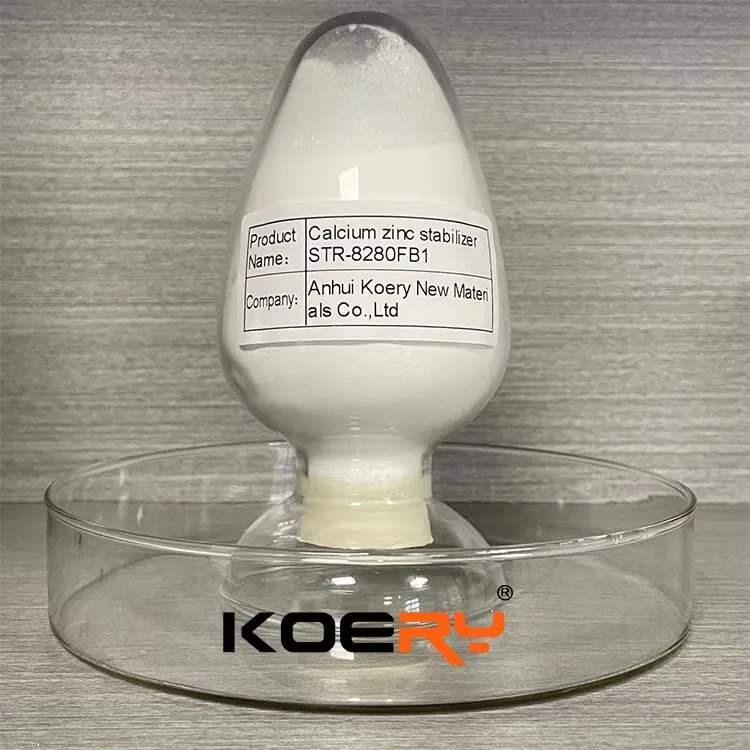
In addition to the well - known function of preventing thermal degradation during processing, heat stabilizers can also indirectly affect the shear strength of WPC flooring. Heat Stabilizer for PVC Foam Board, Heat Stabilizer for PVC Pipe Fittings and Heat Stabilizers for PVC Gusset Plates all maintain the integrity of the polymer structure during the high - temperature processing of WPC.
If thermal degradation occurs, the molecular weight of the polymer decreases, and the mechanical properties, including shear strength, deteriorate. By preventing thermal degradation, heat stabilizers help to preserve the original mechanical properties of the WPC material, ensuring that it can withstand shear forces effectively.
Case Studies
To illustrate the impact of additives on the shear strength of WPC flooring, let's consider a few case studies. In one project, a manufacturer was experiencing low shear strength in their WPC flooring products made with a polyethylene matrix. After adding a coupling agent to improve the adhesion between the wood fibers and the polyethylene, the shear strength increased by approximately 30%. This improvement allowed the flooring to meet the industry standards for heavy - duty applications.
In another case, a company incorporated glass fibers as a reinforcing filler in their WPC flooring. The addition of 10% glass fibers by weight led to a significant increase in shear strength, making the flooring more suitable for commercial settings where high - traffic and heavy loads are common.
Factors Affecting the Effectiveness of Additives
The effectiveness of additives in improving the shear strength of WPC flooring is influenced by several factors. Firstly, the type and quality of the additives themselves matter. High - quality additives with consistent chemical properties are more likely to provide reliable performance improvements.
Secondly, the processing conditions during WPC production play a crucial role. The temperature, pressure, and mixing time can affect the dispersion and reaction of additives. For example, if the mixing temperature is too low, coupling agents may not react fully with the wood and plastic, resulting in sub - optimal adhesion and shear strength.
Finally, the ratio of additives to the WPC matrix is also important. An improper additive ratio can lead to either insufficient improvement or negative effects on the material properties. Therefore, it is necessary to conduct thorough testing and optimization to determine the best additive ratio for a specific WPC formulation.
Conclusion
In conclusion, additives play a vital role in enhancing the shear strength of WPC flooring. Coupling agents improve the interfacial adhesion, reinforcing fillers provide additional strength, lubricants aid in processing while requiring careful control, and heat stabilizers preserve the polymer structure during processing. By understanding the mechanisms of these additives and considering the factors that affect their effectiveness, manufacturers can produce WPC flooring with superior shear strength to meet the demands of various applications.
If you are interested in learning more about how our additives can improve the shear strength and other performance aspects of your WPC flooring products, or if you are looking to discuss potential procurement opportunities, we welcome you to engage in a conversation with us. Our team of experts is ready to provide tailored solutions based on your specific requirements.
References
- X. Gao, Y. Qin, & H. Yu. (2019). The effect of additives on the mechanical properties of wood–plastic composites. Composite Structures, 208, 22 - 31.
- M. Z. Rong, M. Q. Zhang, Y. W. Zeng, & X. Shen. (2001). The effect of coupling agents on the mechanical and morphological properties of recycled HDPE/woodflour composites. Polymer Testing, 20(5), 619 - 628.
- J. Krzysztof, & D. Grzegorz. (2017). The influence of processing conditions on the mechanical properties of wood - plastic composites. Materials (Basel), 10(4), 375.