

Hey there! As a supplier of PVC fittings stabilizers, I've been getting a lot of questions lately about how these stabilizers interact with plasticizers in PVC. So, I thought I'd take some time to break it down for you all.
First off, let's quickly go over what PVC, stabilizers, and plasticizers are. PVC, or polyvinyl chloride, is a widely used plastic known for its durability and versatility. It's used in everything from pipes and fittings to window profiles and vinyl flooring. But PVC has a bit of a problem - it's not very stable when exposed to heat or light. That's where stabilizers come in.
Stabilizers are chemicals that we add to PVC to prevent it from degrading when it's being processed or used. They help keep the PVC in good shape, making sure it doesn't break down, discolor, or become brittle. On the other hand, plasticizers are substances that we mix with PVC to make it more flexible. They work by reducing the intermolecular forces between the PVC chains, allowing them to move more freely and giving the PVC a softer, more pliable texture.
Now, let's dive into how these two interact. When we're formulating PVC products, we need to find the right balance between stabilizers and plasticizers. If we use too much plasticizer, it can actually affect the performance of the stabilizer. Some plasticizers can react with the stabilizer, reducing its effectiveness in protecting the PVC from heat and light. This can lead to premature degradation of the PVC, causing it to lose its strength and color over time.
On the flip side, if we don't use enough plasticizer, the PVC will be too rigid and difficult to process. It might crack or break during manufacturing or installation. And if we don't use enough stabilizer, the PVC will be more prone to heat and light damage, even if we've added the right amount of plasticizer.
One of the key factors in the interaction between stabilizers and plasticizers is compatibility. Not all stabilizers and plasticizers are compatible with each other. Some combinations can lead to phase separation, where the stabilizer and plasticizer don't mix well and form separate layers within the PVC. This can result in uneven distribution of the stabilizer and plasticizer, leading to inconsistent performance of the PVC product.
For example, some traditional lead-based stabilizers might not be fully compatible with certain types of plasticizers. This can cause issues like surface blooming, where the plasticizer migrates to the surface of the PVC and forms a sticky or powdery layer. In contrast, modern calcium-zinc stabilizers, like the ones we offer, tend to have better compatibility with a wide range of plasticizers.
Let's talk about the specific types of PVC products and how the interaction matters. For PVC pipe fittings, we need a stabilizer that can withstand the high temperatures and pressures involved in the extrusion and molding processes. Our Heat Stabilizer for PVC Pipe Fittings is designed to work well with common plasticizers used in pipe fitting production. It provides excellent heat stability, ensuring that the pipe fittings maintain their strength and integrity during use.
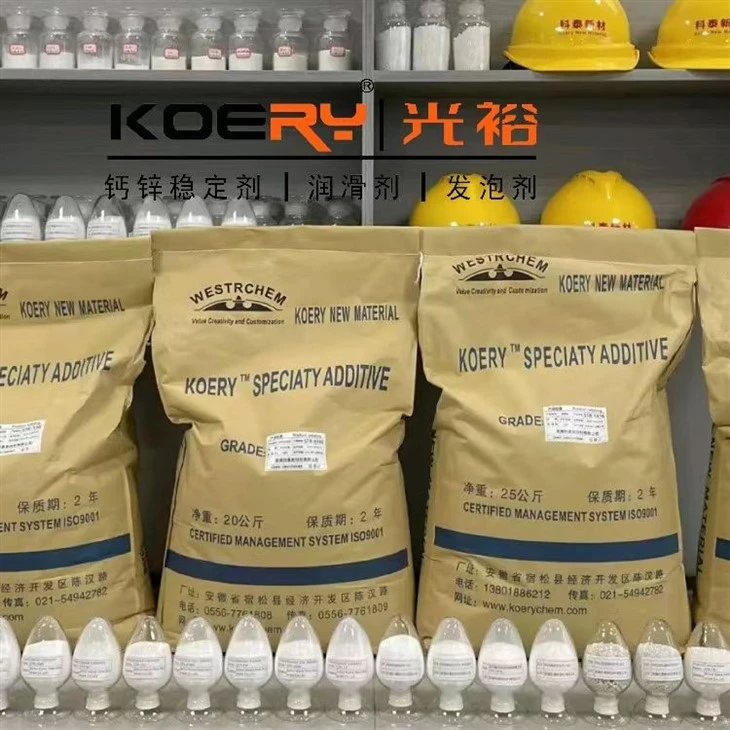
When it comes to PVC white products, such as window profiles and white pipes, color stability is crucial. Our Heat Stabilizer for PVC White Products is formulated to prevent discoloration caused by heat and light. It also works in harmony with plasticizers to keep the PVC flexible and easy to work with.
For PVC profiles, we have the PVC Profile Calcium Zinc Stabilizer. This stabilizer is optimized for the specific requirements of profile extrusion. It interacts effectively with plasticizers to ensure that the profiles have the right balance of flexibility and rigidity, as well as good weather resistance.
Another aspect of the interaction between stabilizers and plasticizers is the effect on the mechanical properties of the PVC. The right combination can improve the impact resistance, tensile strength, and elongation of the PVC. For instance, when the stabilizer and plasticizer work together well, they can help the PVC absorb energy during impact, reducing the likelihood of cracking or breaking.

However, if the interaction is not optimized, the mechanical properties can be negatively affected. For example, if the plasticizer migrates out of the PVC over time, it can cause the PVC to become stiffer and more brittle, leading to a decrease in its impact resistance.
In addition to the chemical and mechanical interactions, we also need to consider the environmental and regulatory aspects. Many traditional stabilizers, such as those containing lead, are being phased out due to their environmental and health risks. Our calcium-zinc stabilizers are a more environmentally friendly alternative. They are non-toxic and comply with strict environmental regulations. When using these stabilizers, we can also choose plasticizers that are environmentally friendly, creating a more sustainable PVC product.
So, how do we determine the best combination of stabilizer and plasticizer for a specific PVC application? It usually involves a lot of testing and experimentation. We start by understanding the requirements of the end product, such as the desired flexibility, heat resistance, and color stability. Then, we test different combinations of stabilizers and plasticizers to find the one that works best.
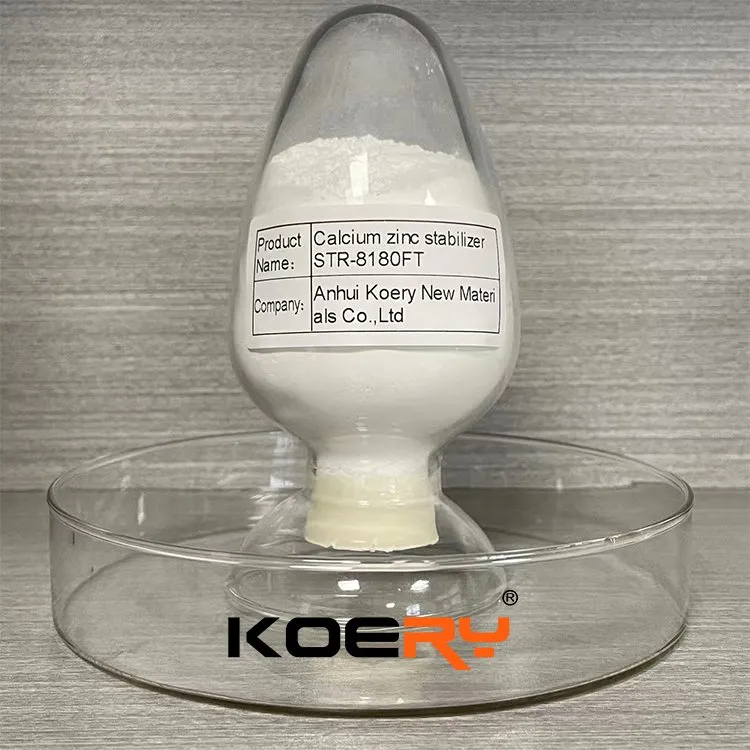
At our company, we have a team of experts who are constantly researching and developing new formulations. We use advanced testing equipment to analyze the performance of different stabilizer-plasticizer combinations. This allows us to provide our customers with the most suitable products for their needs.

If you're in the market for PVC fittings stabilizers and are looking for the best way to incorporate them with plasticizers in your PVC products, we're here to help. We have a wide range of stabilizers that are designed to work effectively with various plasticizers. Whether you're producing pipe fittings, white products, or profiles, we can offer you the right solution.
Don't hesitate to reach out to us to discuss your specific requirements. We're always happy to have a chat and help you find the perfect combination of stabilizers and plasticizers for your PVC applications. Contact us today to start the conversation about improving your PVC products.
References
- "Handbook of PVC Formulating" by Edward J. Wickson
- "Plasticizers: Principles and Practice" by George Wypych