

As a supplier of PVC heat stabilizers, I've witnessed firsthand the crucial role these additives play in the PVC rotational molding process. PVC, or polyvinyl chloride, is a widely used thermoplastic polymer known for its versatility and cost - effectiveness. However, it has a significant drawback: it is highly sensitive to heat. During the rotational molding process, where PVC resin is heated and melted inside a mold that rotates on multiple axes, the heat can cause degradation of the PVC. This is where PVC heat stabilizers come into play.
Understanding PVC Degradation
Before delving into how heat stabilizers work, it's essential to understand what happens to PVC when it's exposed to high temperatures. PVC is composed of long chains of vinyl chloride monomers. When heated, the hydrogen chloride (HCl) molecules can be eliminated from the polymer chains in a process called dehydrochlorination. This leads to the formation of conjugated double bonds within the polymer structure. As more HCl is removed and more double bonds are formed, the PVC begins to discolor, starting from a pale yellow and progressing to brown and eventually black.
Moreover, the formation of conjugated double bonds makes the PVC more brittle and reduces its mechanical properties. The polymer chains can also cross - link, which further deteriorates the material's processability and performance. In the rotational molding process, these degradation effects can lead to products with poor surface quality, reduced strength, and inconsistent dimensions.
Mechanisms of PVC Heat Stabilizers
Acid Scavenging
One of the primary ways PVC heat stabilizers work is by scavenging the hydrogen chloride (HCl) that is released during the dehydrochlorination process. Many heat stabilizers, such as lead - based and calcium - zinc stabilizers, can react with HCl to form stable compounds.
For example, calcium - zinc stabilizers contain calcium and zinc salts. When HCl is released from the PVC, the calcium and zinc ions react with it. The calcium ions react with HCl to form calcium chloride, and the zinc ions form zinc chloride. These reactions effectively remove the HCl from the system, preventing it from catalyzing further dehydrochlorination reactions. This mechanism helps to maintain the integrity of the PVC polymer chains and slows down the degradation process.
Substitution Reactions
Some heat stabilizers can also participate in substitution reactions with the labile chlorine atoms in the PVC polymer chains. Labile chlorine atoms are those that are more likely to be removed as HCl during heating. By replacing these labile chlorine atoms with more stable groups, the heat stabilizer can prevent the initiation of dehydrochlorination.
For instance, certain organotin stabilizers can react with the labile chlorine atoms in PVC. The tin atoms in the stabilizer can form covalent bonds with the carbon atoms in the polymer chain, replacing the labile chlorine atoms. This substitution makes the polymer chain more stable and less prone to heat - induced degradation.
Preventing Oxidation
In addition to dehydrochlorination, PVC can also undergo oxidation when exposed to heat and oxygen. Oxidation can lead to the formation of carbonyl groups and other oxygen - containing functional groups in the polymer, which can further degrade the PVC's properties.
Heat stabilizers can act as antioxidants to prevent oxidation. They can react with the free radicals that are formed during the oxidation process, terminating the radical chain reactions. Some heat stabilizers contain phenolic antioxidants or phosphite antioxidants. These antioxidants can donate hydrogen atoms to the free radicals, converting them into more stable molecules and preventing the propagation of the oxidation reaction.
Role of PVC Heat Stabilizers in Rotational Molding
Ensuring Consistent Melt Flow
In rotational molding, it is crucial to have a consistent melt flow of the PVC resin. Degraded PVC has a higher viscosity and is more difficult to flow, which can lead to uneven distribution of the material in the mold. Heat stabilizers help to maintain the PVC's melt flow properties by preventing degradation.
By scavenging HCl, participating in substitution reactions, and preventing oxidation, heat stabilizers keep the PVC polymer chains in a more stable state. This allows the PVC to melt and flow smoothly during the rotational molding process, resulting in products with uniform thickness and good surface finish.
Improving Product Appearance
As mentioned earlier, PVC degradation leads to discoloration. In rotational molding, products with a consistent and attractive appearance are highly desirable. Heat stabilizers prevent the discoloration of PVC by inhibiting the formation of conjugated double bonds.
By maintaining the color of the PVC, heat stabilizers ensure that the final products have a more appealing look. This is particularly important for applications where the appearance of the product is a key factor, such as consumer goods and decorative items.
Enhancing Mechanical Properties
The mechanical properties of PVC products, such as tensile strength, impact resistance, and flexibility, are crucial for their performance. Degraded PVC has reduced mechanical properties due to the formation of brittle structures and cross - linking.
PVC heat stabilizers help to preserve the mechanical properties of the PVC by preventing degradation. By maintaining the integrity of the polymer chains, heat stabilizers ensure that the rotational - molded products have the required strength and flexibility. This is essential for applications where the products need to withstand mechanical stress, such as pipes and containers.
Types of PVC Heat Stabilizers Suitable for Rotational Molding
Calcium - Zinc Stabilizers
Calcium - zinc stabilizers are widely used in PVC rotational molding due to their environmental friendliness and good performance. They are non - toxic and comply with many environmental regulations.
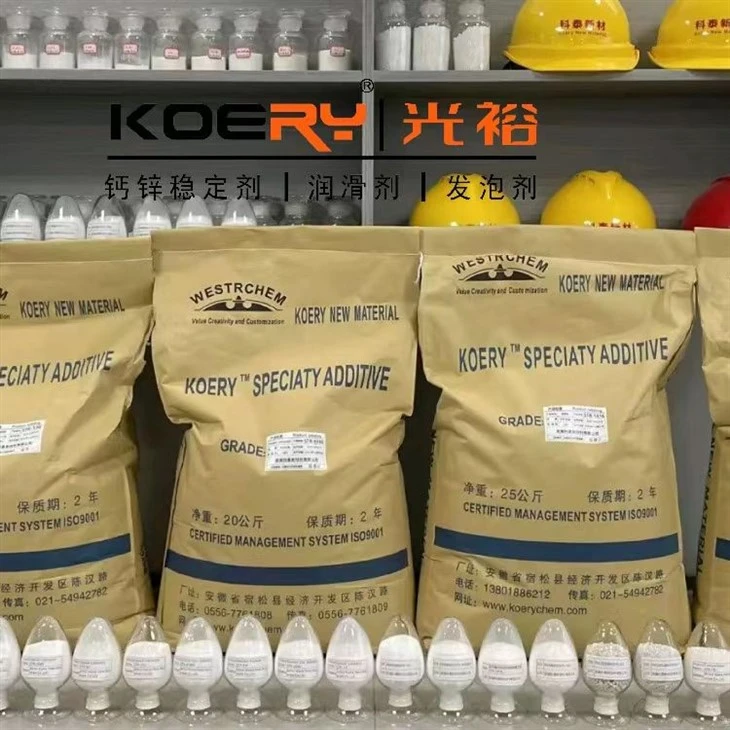
As mentioned earlier, calcium - zinc stabilizers work by scavenging HCl and providing long - term stability to the PVC. They are also relatively cost - effective, making them a popular choice for many rotational molding applications. You can learn more about calcium - zinc stabilizers for different PVC products, such as Heat Stabilizer for PVC Window Profiles, PVC Profile Calcium Zinc Stabilizer, and Calcium Zinc Stabilizer for PVC Pipes.

Organotin Stabilizers
Organotin stabilizers offer excellent heat stability and transparency. They are particularly suitable for applications where high - quality, clear PVC products are required. Organotin stabilizers work through substitution reactions with labile chlorine atoms and also have good acid - scavenging properties.
However, organotin stabilizers can be more expensive than other types of heat stabilizers, and some of them may have environmental concerns. Therefore, their use is often limited to specific applications where their unique properties are essential.
Lead - Based Stabilizers
Lead - based stabilizers were once widely used in PVC processing due to their excellent heat - stabilizing properties. They are very effective in scavenging HCl and providing long - term stability to PVC.
However, lead is a toxic heavy metal, and its use in PVC products is now restricted in many countries due to environmental and health concerns. In the rotational molding industry, the use of lead - based stabilizers has significantly decreased, and they are being replaced by more environmentally friendly alternatives.
Conclusion
PVC heat stabilizers are indispensable in the PVC rotational molding process. They work through multiple mechanisms, including acid scavenging, substitution reactions, and oxidation prevention, to prevent the degradation of PVC caused by heat. By doing so, they ensure that the rotational - molded PVC products have good surface quality, consistent dimensions, and excellent mechanical properties.
As a supplier of PVC heat stabilizers, we are committed to providing high - quality products that meet the specific needs of the rotational molding industry. Whether you are looking for calcium - zinc stabilizers for general applications or organotin stabilizers for high - end products, we have the expertise and resources to support you.
If you are interested in learning more about our PVC heat stabilizers or would like to discuss your specific requirements, please feel free to contact us. We look forward to the opportunity to work with you and help you achieve the best results in your PVC rotational molding processes.
References
- Wypych, G. (2004). Handbook of PVC Formulating. William Andrew Publishing.
- Carraher, C. E. (2003). Polymer Chemistry. Marcel Dekker.
- Bhattacharya, S. N., & Misra, B. M. (2004). Plastics Additives and Modifiers Handbook. William Andrew Publishing.