

Hey there! As a supplier of calcium zinc heat stabilizers, I've been getting a lot of questions lately about how these stabilizers affect the anti-static properties of plastics. So, I thought I'd dive into this topic and share some insights with you all.
First off, let's talk a bit about what calcium zinc heat stabilizers are. These stabilizers are used in the plastic industry to prevent the degradation of plastics when they're exposed to heat during processing. They work by neutralizing the acids that are produced during the thermal decomposition of plastics, and they also help to prevent the formation of free radicals, which can cause the plastic to break down.
Now, onto the main question: What's the effect of calcium zinc heat stabilizers on the anti-static properties of plastics? Well, it's a bit of a complex issue, but I'll do my best to break it down.
How Anti - Static Properties Work in Plastics
Plastics are typically insulators, which means they can easily accumulate static electricity. Static electricity is generated when two materials come into contact and then separate, causing a transfer of electrons. In the case of plastics, this can lead to a build - up of static charge on the surface of the plastic.
This static charge can cause a number of problems. For example, it can attract dust and dirt, making the plastic look dirty and reducing its aesthetic appeal. It can also cause problems during manufacturing processes, such as jamming in machinery or attracting particles that can contaminate the plastic product.
The Role of Calcium Zinc Heat Stabilizers
Calcium zinc heat stabilizers can have an indirect effect on the anti - static properties of plastics. One way they do this is by improving the overall quality and stability of the plastic during processing. When a plastic is properly stabilized with calcium zinc heat stabilizers, it is less likely to undergo thermal degradation. This means that the molecular structure of the plastic remains more intact, which can in turn affect its electrical properties.
A well - stabilized plastic may have a more uniform surface and molecular structure. This uniformity can reduce the likelihood of charge accumulation on the surface. For example, if the plastic has a more consistent molecular arrangement, there are fewer areas where charge can become trapped.
Chemical Interactions
Some calcium zinc heat stabilizers may also contain additives or components that can have a direct impact on the anti - static properties of plastics. For instance, certain stabilizer formulations may include substances that can act as anti - static agents. These agents can either dissipate the static charge or prevent its formation in the first place.
However, it's important to note that not all calcium zinc heat stabilizers will have a significant impact on anti - static properties. The effect depends on the specific formulation of the stabilizer, the type of plastic, and the processing conditions.
Types of Plastics and Their Response
Different types of plastics respond differently to calcium zinc heat stabilizers in terms of anti - static properties. For example, PVC (polyvinyl chloride) is a widely used plastic that often requires heat stabilizers. When it comes to anti - static properties, PVC can benefit from the use of calcium zinc heat stabilizers.
PVC Profile Calcium Zinc Stabilizer is specifically designed for PVC profiles. This type of stabilizer can help to improve the overall quality of the PVC, which may also have a positive effect on its anti - static properties. By ensuring that the PVC is properly stabilized during processing, it can have a more consistent surface and be less prone to static charge build - up.
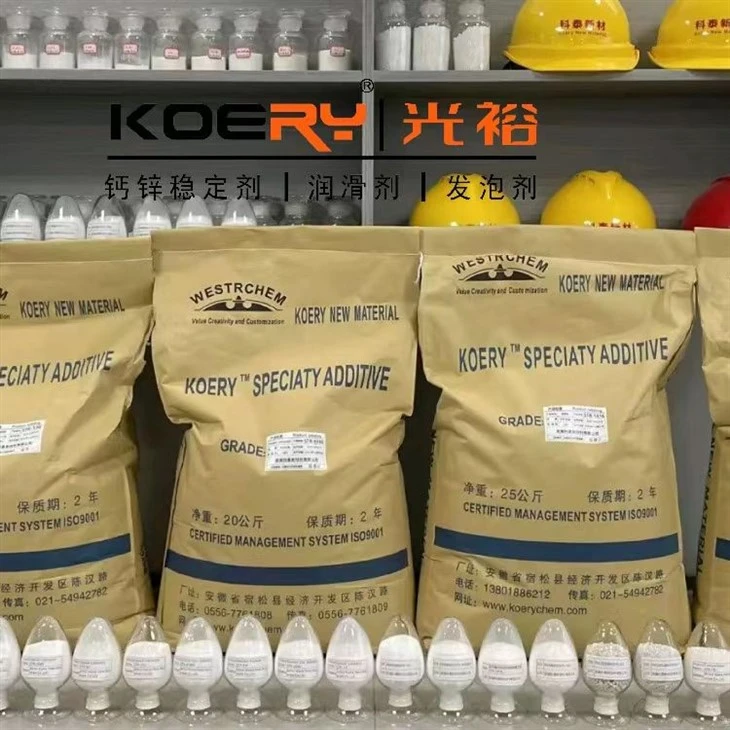

Another type of plastic is LVT (luxury vinyl tile). Speciality LVT Floor Calcium Zinc Stabilizer is tailored for LVT flooring applications. LVT floors are often used in high - traffic areas, and static charge can be a real problem as it can attract dirt and make the floors look dirty quickly. The right calcium zinc heat stabilizer can help to reduce this static charge, making the LVT floors more practical and aesthetically pleasing.
PVC edge banding is also an important application. Heat Stabilizer for PVC Edge Banding can play a role in improving the anti - static properties of the edge banding. This is crucial because edge banding is often used in furniture and cabinetry, where a clean and static - free appearance is desirable.
Factors Affecting the Effectiveness
There are several factors that can affect how well calcium zinc heat stabilizers improve the anti - static properties of plastics. The concentration of the stabilizer is one important factor. If the concentration is too low, it may not be sufficient to fully stabilize the plastic and have a significant impact on anti - static properties. On the other hand, if the concentration is too high, it may lead to other problems, such as changes in the physical properties of the plastic.
The processing temperature and time also play a role. Different plastics have different optimal processing conditions, and the calcium zinc heat stabilizer needs to be able to function effectively within these conditions. If the processing temperature is too high or the time is too long, the stabilizer may break down, reducing its effectiveness in both heat stabilization and anti - static improvement.
Testing and Evaluation
To determine the effect of calcium zinc heat stabilizers on the anti - static properties of plastics, various testing methods can be used. One common method is to measure the surface resistivity of the plastic. A lower surface resistivity indicates that the plastic is more conductive and less likely to accumulate static charge.
Another method is to observe the amount of dust and dirt attracted to the plastic surface over a period of time. If a plastic with a calcium zinc heat stabilizer attracts less dust compared to a plastic without the stabilizer, it's a good indication that the stabilizer is having a positive effect on the anti - static properties.
Conclusion
In conclusion, calcium zinc heat stabilizers can have a notable effect on the anti - static properties of plastics. While the effect may be indirect in some cases, through improving the overall quality and stability of the plastic, there are also formulations that can have a more direct impact. Different types of plastics, such as PVC profiles, LVT floors, and PVC edge banding, can all benefit from the right calcium zinc heat stabilizer.
If you're in the plastic manufacturing industry and are looking to improve the anti - static properties of your products, it's worth considering the use of our calcium zinc heat stabilizers. We offer a range of products tailored to different plastic applications, and our team can help you find the best solution for your specific needs. If you're interested in learning more or starting a procurement discussion, don't hesitate to reach out. We're here to assist you in enhancing the quality of your plastic products.
References
- Smith, J. (2018). "The Basics of Plastic Stabilization". Plastics Technology Journal.
- Brown, A. (2019). "Anti - Static Properties in Plastics: Causes and Solutions". Industrial Plastics Review.
- Green, K. (2020). "Calcium Zinc Heat Stabilizers: Applications and Benefits". Plastic Science Quarterly.