

Hey there, folks! I'm a supplier of PVC fittings stabilizers, and today I wanna chat about something super important: the impact of PVC fittings stabilizers on the abrasion resistance of PVC fittings.
First off, let's talk a bit about PVC fittings. PVC, or polyvinyl chloride, is one of the most widely used plastics in the world. It's found in everything from pipes and cables to window profiles and more. But PVC has its limitations. One of the big issues is its relatively poor abrasion resistance. Abrasion resistance is crucial, especially for PVC fittings that are used in high - traffic or rough - handling environments. For example, PVC pipes in industrial settings might be exposed to constant rubbing against other materials or being dragged across surfaces. If they don't have good abrasion resistance, they can wear out quickly, leading to leaks, malfunctions, and the need for costly replacements.
So, where do stabilizers come in? Well, PVC fittings stabilizers play a key role in enhancing the overall performance of PVC, and abrasion resistance is no exception. There are different types of stabilizers out there, like lead - based, calcium - zinc - based, and organic tin - based stabilizers. Each type has its own unique properties and effects on PVC.
Let's start with calcium - zinc stabilizers. These are becoming increasingly popular due to their environmental friendliness compared to lead - based stabilizers. Calcium - zinc stabilizers work by preventing the degradation of PVC during processing and use. When PVC degrades, its molecular structure breaks down, which can lead to a loss of physical properties, including abrasion resistance. By stabilizing the PVC, calcium - zinc stabilizers help maintain the integrity of the material.

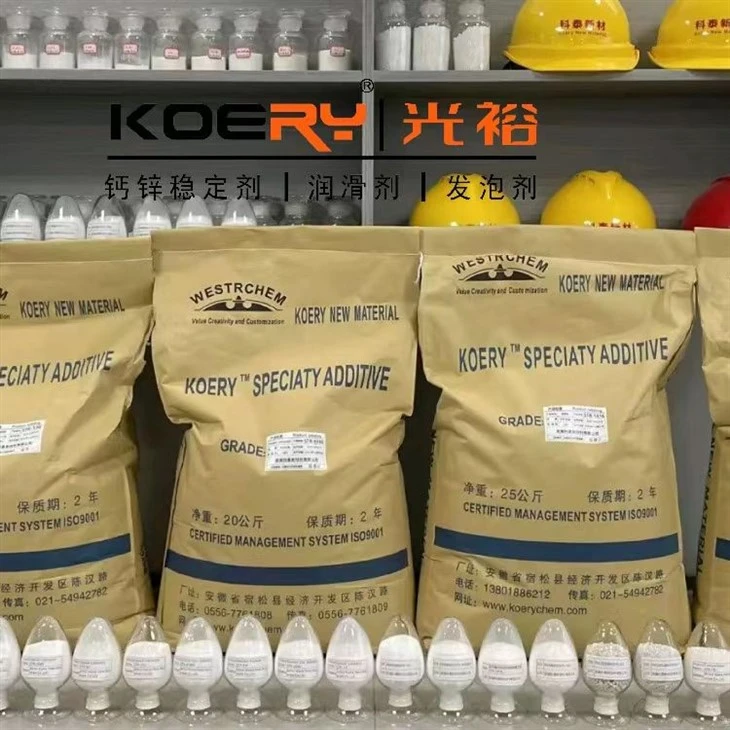
For example, in PVC pipes, Calcium Zinc Stabilizer for PVC Pipes can form a protective layer on the surface of the PVC. This layer acts as a barrier between the PVC and the abrasive materials it comes into contact with. It reduces the direct friction between the two, thus improving the abrasion resistance. In a study, it was found that PVC pipes stabilized with calcium - zinc stabilizers showed significantly less surface wear after being subjected to abrasion tests compared to non - stabilized pipes.
Another area where calcium - zinc stabilizers shine is in PVC profiles. PVC Profile Calcium Zinc Stabilizer can enhance the hardness of the PVC profile. A harder PVC profile is more resistant to abrasion. The stabilizer helps in cross - linking the PVC molecules more effectively, which increases the overall strength and hardness of the profile. This means that PVC window profiles, for instance, are less likely to get scratched or damaged during installation or daily use.
Now, let's talk about heat stabilizers for PVC cable materials. Heat Stabilizer for PVC Cable Material is also important for abrasion resistance. Cables are often subjected to bending, stretching, and rubbing against other objects. The heat stabilizer not only helps in preventing the PVC insulation from degrading due to heat generated during electrical conduction but also improves its mechanical properties. When the PVC insulation is more stable, it can better withstand the abrasion caused by normal use.
But it's not just about adding any stabilizer. The amount and type of stabilizer used need to be carefully selected. Adding too much stabilizer can make the PVC too rigid or can even cause some compatibility issues that might actually reduce the abrasion resistance. On the other hand, using too little won't provide enough protection. That's where our expertise as a PVC fittings stabilizer supplier comes in.
We've spent years researching and developing the right formulations of stabilizers for different types of PVC applications. We use high - quality raw materials and state - of - the - art manufacturing processes to ensure that our stabilizers are as effective as possible. Our team of experts can analyze your specific requirements, whether you're making pipes, profiles, or cables, and recommend the best stabilizer solution for you.
For those in the market for PVC fittings stabilizers, we're here to help. Whether you're a small - scale manufacturer looking to improve the quality of your products or a large - scale industrial player aiming for more cost - effective and durable PVC solutions, we've got what you need. Our stabilizers can not only boost the abrasion resistance of your PVC fittings but also improve other performance aspects like heat stability, weather resistance, and mechanical strength.
So, if you're interested in learning more about our PVC fittings stabilizers and how they can benefit your products, don't hesitate to get in touch. Just reach out to us, and we'll be more than happy to have a detailed discussion about your needs and how we can help you achieve the best results with your PVC fittings.
References
- "The Handbook of PVC Formulating", E. J. Wickson.
- "Polyvinyl Chloride: Properties, Processing, and Applications", J. K. Sears and J. R. Darby.