

As a dedicated supplier of additives for WPC (Wood - Plastic Composite) flooring, I've witnessed firsthand the crucial role additives play in enhancing the performance of WPC products. One of the key performance indicators is the flexural strength of WPC flooring, which determines its ability to withstand bending forces without breaking. In this blog, I'll delve into how additives affect the flexural strength of WPC flooring, drawing on both scientific knowledge and practical experience.
Understanding Flexural Strength in WPC Flooring
Flexural strength is a measure of a material's ability to resist deformation under bending. For WPC flooring, which is often subjected to various loads from foot traffic, furniture, and other sources, high flexural strength is essential. A floor with good flexural strength can maintain its shape and integrity over time, reducing the risk of cracking or warping.
The flexural strength of WPC flooring is influenced by several factors, including the composition of the wood and plastic components, the manufacturing process, and the use of additives. Additives are substances added to the WPC formulation to improve specific properties, such as strength, durability, and weather resistance.
Types of Additives and Their Impact on Flexural Strength
Reinforcing Additives
Reinforcing additives are designed to enhance the mechanical properties of WPC flooring, including flexural strength. Fiberglass is a common reinforcing additive used in WPC products. When added to the WPC matrix, fiberglass acts as a reinforcement, distributing the load more evenly across the material. This results in an increase in flexural strength, as the fiberglass fibers resist the bending forces and prevent the material from deforming easily.
Another example of a reinforcing additive is carbon nanotubes. These tiny, tube - shaped carbon molecules have extremely high strength and stiffness. When incorporated into WPC flooring, carbon nanotubes can significantly improve the flexural strength by providing additional reinforcement at the nanoscale. They also enhance the overall mechanical performance of the material by improving its resistance to crack propagation.
Coupling Agents
Coupling agents are additives that improve the adhesion between the wood and plastic components in WPC flooring. In a WPC composite, the wood fibers and plastic matrix have different chemical properties, which can lead to poor bonding between them. This weak bonding can reduce the flexural strength of the material, as the load is not effectively transferred between the wood and plastic phases.
Coupling agents work by creating a chemical bridge between the wood fibers and the plastic matrix. They react with the surface of the wood fibers and the plastic, forming strong chemical bonds that enhance the adhesion between the two components. As a result, the load can be more efficiently transferred between the wood and plastic, leading to an increase in flexural strength.
Maleic anhydride - grafted polypropylene (MAPP) is a widely used coupling agent in WPC manufacturing. When added to the WPC formulation, MAPP improves the compatibility between the wood fibers and polypropylene matrix, resulting in a more homogeneous and stronger composite with improved flexural strength.
Stabilizers
Stabilizers are additives used to protect WPC flooring from degradation caused by heat, light, and oxygen. While their primary function is not directly related to flexural strength, they can have an indirect impact on it. Degradation of the WPC material over time can lead to a decrease in flexural strength, as the chemical structure of the material is altered.
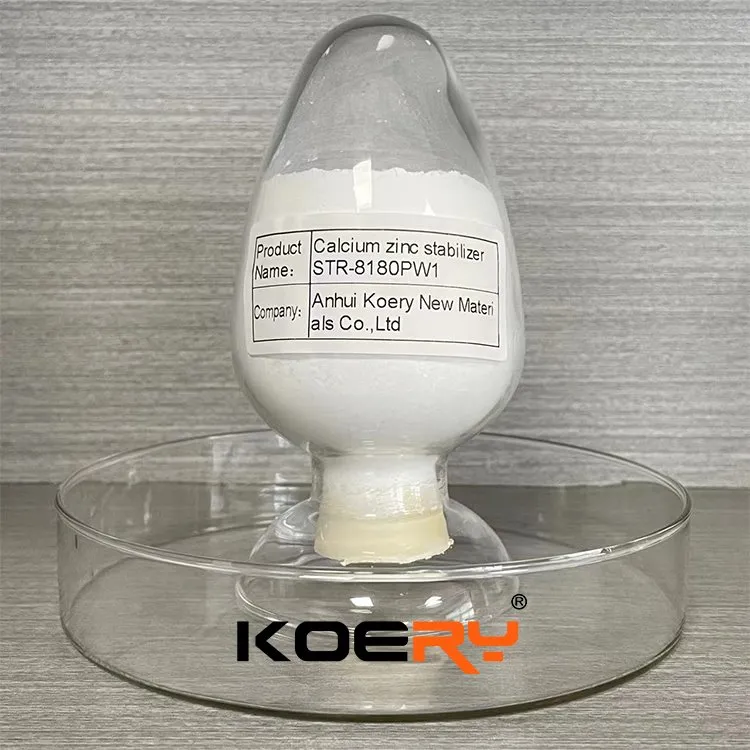
For example, Calcium Zinc Stabilizer For PVC Pipes and Heat Stabilizer for PVC Drainage Pipes are commonly used in PVC - based WPC products. These stabilizers prevent the degradation of the PVC matrix due to heat during the manufacturing process and exposure to sunlight during use. By maintaining the integrity of the PVC matrix, the stabilizers help to preserve the flexural strength of the WPC flooring over time.
Similarly, Heat Stabilizer for PVC Water Pipes can also be beneficial for WPC flooring, especially in applications where the material is exposed to high temperatures or moisture. By protecting the PVC from thermal and hydrolytic degradation, these stabilizers ensure that the WPC flooring retains its mechanical properties, including flexural strength.
Optimization of Additive Use for Flexural Strength
To achieve the optimal flexural strength in WPC flooring, it's important to carefully select and optimize the use of additives. The type and amount of additives used depend on several factors, such as the specific requirements of the WPC product, the manufacturing process, and the cost - effectiveness.
When using reinforcing additives, it's crucial to find the right balance between the amount of additive and the performance improvement. Adding too much reinforcing additive can lead to processing difficulties, such as increased viscosity and poor dispersion, which can actually reduce the flexural strength of the material. On the other hand, adding too little additive may not provide the desired improvement in flexural strength.
For coupling agents, the dosage should be optimized to ensure maximum adhesion between the wood and plastic components. This often requires conducting experimental trials to determine the optimal concentration of the coupling agent for a specific WPC formulation.
In the case of stabilizers, the type and amount used should be based on the expected environmental conditions to which the WPC flooring will be exposed. For example, in outdoor applications, where the material is exposed to sunlight and high temperatures, a higher concentration of UV stabilizers and heat stabilizers may be required to maintain the flexural strength over time.
Practical Considerations in Additive Selection
When selecting additives for WPC flooring, it's also important to consider other practical factors, such as cost, availability, and environmental impact. Some additives, such as carbon nanotubes, can be expensive, which may limit their use in large - scale production. Therefore, it's necessary to evaluate the cost - benefit ratio of each additive and choose the most suitable one based on the specific requirements of the project.
Availability is another important factor. Some additives may be difficult to source in large quantities or may have long lead times, which can affect the production schedule. It's important to work with reliable suppliers who can ensure a consistent supply of high - quality additives.
Environmental impact is also a growing concern in the WPC industry. Additives should be selected in a way that minimizes their impact on the environment. For example, choosing biodegradable or recyclable additives can help reduce the environmental footprint of WPC flooring.
Conclusion
Additives play a crucial role in determining the flexural strength of WPC flooring. Reinforcing additives, coupling agents, and stabilizers can all have a significant impact on the mechanical properties of the material, either directly or indirectly. By carefully selecting and optimizing the use of additives, manufacturers can produce WPC flooring with improved flexural strength, durability, and overall performance.
As a supplier of additives for WPC flooring, we are committed to providing high - quality additives that meet the specific needs of our customers. Our range of additives includes reinforcing agents, coupling agents, and stabilizers, all of which are designed to enhance the performance of WPC products.
If you are interested in improving the flexural strength of your WPC flooring or have any questions about our additives, we invite you to contact us for further discussion and potential procurement. Our team of experts is ready to assist you in finding the best additive solutions for your WPC manufacturing process.

References
- Bledzki, A. K., & Gassan, J. (1999). Composites reinforced with cellulose based fibres. Progress in Polymer Science, 24(2), 221 - 274.
- Clemons, C. M. (2009). Wood - plastic composites in the United States: a review. Forest Products Journal, 59(7 - 8), 6 - 18.
- Li, X., Wolcott, M. P., & Gardner, D. J. (2007). Effects of coupling agents on the properties of wood - plastic composites: A review. Composites Part A: Applied Science and Manufacturing, 38(6), 1189 - 1203.