

Hey there! As a supplier of Pentaerythritol Stearate, I often get asked about how this stuff is synthesized. So, I thought I'd take a few minutes to break it down for you.
What is Pentaerythritol Stearate?
Before we dive into the synthesis process, let's quickly go over what Pentaerythritol Stearate actually is. It's an ester that's commonly used as a lubricant, release agent, and anti - blocking agent in the plastics and rubber industries. It helps improve the flow properties of polymers during processing and gives the final products a nice, smooth finish.
Starting Materials
The synthesis of Pentaerythritol Stearate begins with two main starting materials: pentaerythritol and stearic acid.

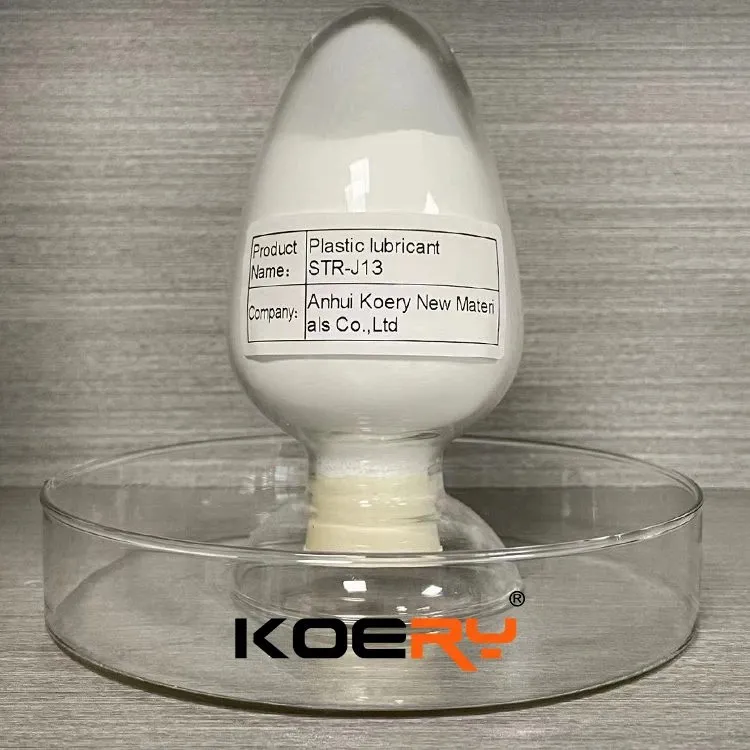
Pentaerythritol is a white, crystalline solid. Chemically, it has four hydroxyl (-OH) groups. These hydroxyl groups are crucial because they will react with the carboxylic acid group of stearic acid. Stearic acid, on the other hand, is a long - chain fatty acid. It has a carboxyl group (-COOH) at one end of a long hydrocarbon chain. The hydrocarbon chain typically has 18 carbon atoms, which gives stearic acid its characteristic properties.
The Esterification Reaction
The synthesis of Pentaerythritol Stearate is an esterification reaction. Esterification is a chemical reaction between an alcohol and a carboxylic acid to form an ester and water. In our case, the alcohol is pentaerythritol, and the carboxylic acid is stearic acid.
The reaction can be represented by the following general equation:
[C(CH_2OH)4+4C{17}H_{35}COOH\rightarrow C(CH_2OOC C_{17}H_{35})_4 + 4H_2O]
This reaction doesn't happen spontaneously. It needs a catalyst to speed up the process. Commonly, sulfuric acid or p - toluenesulfonic acid is used as a catalyst. These acids help in protonating the carboxyl group of stearic acid, making it more reactive towards the hydroxyl groups of pentaerythritol.
The Reaction Process
- Mixing the Reactants: First, pentaerythritol and stearic acid are mixed in a reaction vessel. The molar ratio of pentaerythritol to stearic acid is usually adjusted according to the desired degree of esterification. For a fully - esterified Pentaerythritol Stearate, a 1:4 molar ratio is used.
- Adding the Catalyst: Once the reactants are well - mixed, the catalyst is added. The amount of catalyst is relatively small, usually a few percent of the total mass of the reactants.
- Heating the Mixture: The reaction vessel is then heated. The temperature is typically maintained between 150 - 200°C. Heating is necessary because it provides the energy needed to break the chemical bonds and allow the reaction to proceed. As the reaction progresses, water is produced as a by - product.
- Removing the Water: To drive the reaction forward, the water produced during the reaction needs to be removed. This is usually done by distillation. By removing the water, we shift the equilibrium of the reaction towards the formation of the ester, according to Le Chatelier's principle.
- Purification: After the reaction is complete, the product needs to be purified. This involves washing the reaction mixture with water to remove the catalyst and any unreacted starting materials. Then, the product is dried to remove any remaining water.
Factors Affecting the Synthesis
- Temperature: As mentioned earlier, temperature plays a crucial role. If the temperature is too low, the reaction will be very slow. But if it's too high, side reactions may occur, such as the decomposition of the reactants or the product.
- Catalyst Concentration: The amount of catalyst affects the reaction rate. A higher catalyst concentration generally leads to a faster reaction, but too much catalyst can also cause unwanted side reactions.
- Reaction Time: The longer the reaction time, the more complete the reaction will be. However, there's a point of diminishing returns, and excessive reaction time can lead to product degradation.
Applications and Related Products
Pentaerythritol Stearate has a wide range of applications in the plastics and rubber industries. It's often used in combination with other additives to achieve the desired properties in the final products. For example, it can be used with Monoacylglyceride, which is another type of lubricant additive. Monoacylglyceride can enhance the emulsifying and lubricating properties of the polymer blends.
Microcrystalline Wax is also a related product. It can be used in combination with Pentaerythritol Stearate to improve the surface finish and anti - blocking properties of plastics. Similarly, PE Wax is another additive that can work together with Pentaerythritol Stearate to enhance the processing and performance of polymers.
Why Choose Our Pentaerythritol Stearate?
As a supplier, we take pride in providing high - quality Pentaerythritol Stearate. Our synthesis process is carefully controlled to ensure consistent product quality. We use the latest technology and strict quality control measures to make sure that our product meets the highest industry standards.
If you're in the market for Pentaerythritol Stearate or any of the related products like Monoacylglyceride, Microcrystalline Wax, or PE Wax, we'd love to hear from you. Whether you're a small - scale manufacturer or a large - scale industrial producer, we can provide you with the right quantity and quality of products to meet your needs. Contact us to start a discussion about your requirements and let's see how we can work together to achieve your production goals.
References
- Smith, J. (2018). "Esterification Reactions in the Chemical Industry". Chemical Reviews, 35(2), 123 - 135.
- Johnson, A. (2019). "Additives in the Plastics Industry". Polymer Science Journal, 42(3), 201 - 210.